Forestry Mulching in Marion Oaks, FL
Frequently Asked Questions
What does mulching cost per acre?
$1,000 to $1,700 an acre for brush, $1,200 to $1,900 selective, and $1,500 to $2,375 for a complete mulch in this county. Thick palmetto sits high in each scope.
How much can one day cover?
One to two acres on most jobs. Thick growth covers less. The quote names the range for your land.
Does the mulch need to be hauled off?
No. The chips stay as a mat. No piles, no burn, no haul line on the quote.
Will the brush grow back?
Some will, in time. The mat slows it a lot. Most owners mow once the land is open and hold the line with ease.
Can you mulch a fence line?
Yes. Fence lines are the top mulching call here. The head runs the line and leaves the posts clean.
Is the site visit free?
Yes. The visit and the written price cost nothing.
What Does My Land Clearing Project Cost?
Land clearing around Marion Oaks is priced by the acre, and what is growing on the acre sets the band — thin brush, thicker growth with medium trees, or dense woods. Lot work for a build carries stump grubbing and haul-off in its band, stumps grind by the inch, and pads price by the square foot. Here are the ranges we work from, and a calculator built on the same numbers.
Land Clearing
One acre of moderate growth — thicker brush and medium trees — runs $2,500–$4,275 around Marion Oaks. Light brush starts at $1,200–$2,375 an acre and dense woods run $4,500–$7,600. The price covers felling and mulching or pushing out the growth, with stumps cut flush; grubbing stumps out and hauling debris off price as their own lines.
Forestry Mulching
One acre mulched selective — growth cleared, marked trees kept — runs $1,200–$1,900. Brush-only work runs $1,000–$1,700 an acre and a complete mulch of everything on the acre runs $1,500–$2,375. Nothing leaves the land: the cut growth stays as a mulch mat that holds the soil and slows regrowth.
Lot Clearing
A half-acre lot with moderate growth, taken to build-ready, runs $1,600–$2,600. The band carries more than plain clearing: stumps grubbed out in the build area and the debris hauled off, so a builder can stake the lot when we leave. A standard quarter-acre Marion Oaks lot usually lands on the job minimum, $1,200–$1,800.
Stump Grinding
Stumps grind at $3–$6 per inch of diameter across the widest point at ground level. One 24-inch stump figures under the job minimum, so it prices at the floor: $150–$250. A run of stumps on one visit adds up fast — fourteen stumps averaging about 22 inches figure $924–$1,848 at the same rate.
Grading & Building Pads
A 40 by 60 ft pad — 2,400 sq ft — cut, filled, and packed runs $2,040–$3,240. Grading the soil that's already there runs $0.55–$1.05 per sq ft; cut-and-fill work with imported fill runs $0.85–$1.35. Marion County limestone sits close to the surface on many lots, and pad work that hits rock is named at the visit, not buried in the band.
What Moves the Price
- Density. What is growing on the acre is the price. Each density step up roughly doubles the work — palmetto root mats are the local trap, and a light-looking lot in thick palmetto prices like moderate growth.
- Haul-off. Mulching in place is the low-cost finish. Hauling debris off instead adds about a third to a clearing job — trucks, loads, and dump time.
- Ground. Wet, steep, or rocky ground slows every machine on the job. Marion and Lake county lots hold water, and soft ground can rule out haul trucks entirely — which is why mulching wins on wet land.
- Stumps. A mulcher cuts growth flush; it does not take stumps below grade. Grinding is its own per-inch line, and grubbing stumps out of a build area belongs to lot work.
- Job size. Small lots price off a job minimum, not the per-acre math — no crew mobilizes a mulcher, a truck, and a trailer for a few hundred dollars. The minimums are printed in every band here.
Where these numbers come from. Published national cost guides — Angi's 2026 land-clearing and forestry-mulching project data and HomeGuide's per-acre density tiers — trimmed to Central Florida labor levels (Ocala and Orlando metro wages run below the national mean; the machines and fuel do not). They are planning ranges, not a quote.
What these prices do not carry. County land-clearing and land-disturbance permits, gopher tortoise surveys on sandy upland, and wetland-buffer work are pass-through or owner-side items and sit outside every band. Removing a mature oak is a tree-removal price set at the visit, never a per-acre line. Fill dirt beyond a pad band's allowance prices at market. Every final price is confirmed at the free in-person visit, in writing, before work starts.
Estimate Your Project
A standard Marion Oaks home lot is about a quarter acre; acreage jobs run one to ten acres.
Stumps are cut flush at this price. Grubbing stumps out and grinding below grade are separate lines, priced at the visit.
One pass cuts the growth and lays it down as a mulch mat — nothing is hauled off.
Palmetto root mats run slow — a light-looking lot in thick palmetto prices like the next scope up. The visit confirms which scope your land is.
Most Marion Oaks platted lots are a quarter acre. Two half-lots side by side figure as one half-acre job.
Lot bands carry the full build-ready scope: clearing, stumps grubbed out in the build area, and debris hauled off.
Measure across the widest point at ground level, root flare included.
Every stump on the same visit prices on the same per-inch rate.
Stumps are ground 6 inches below grade and the chips raked level into the hole.
A 40 by 60 ft barn or shop pad is 2,400 sq ft; a 30 by 40 ft pad is 1,200.
Fill dirt beyond the pad band's allowance is priced at market at the visit and named as its own line.
Free — no obligation. Your calculator numbers ride along with the request.
Send Your Project to Marion Oaks Land Clearing
Your estimate is attached automatically. Add your info and — if you can — a few photos of the land. Photos help us price the job before we ever set foot on it. Prefer to talk? Call (129) 828-7534.
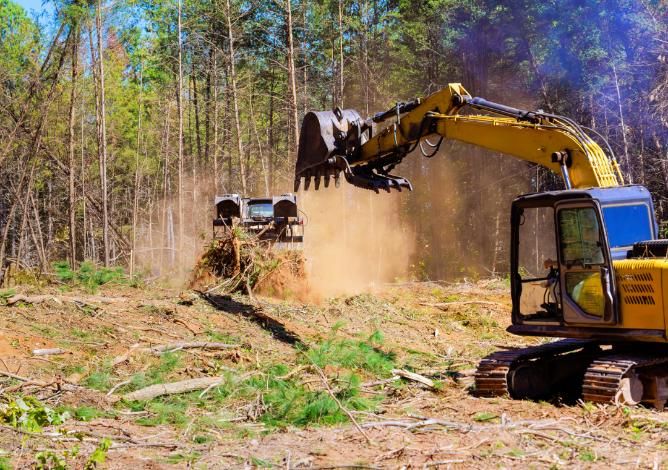
Forestry mulching uses one machine to cut brush and small trees and lay the chips down as a mulch mat in the same pass. In Marion County, most jobs run $1,000 to $2,375 per acre — brush-only work at the low end, a complete mulch at the top. There is no burn pile and no haul-off. The mat holds the soil and slows new growth, which is why it is the top pick for fence lines, field edges, and vacant lots an owner wants to walk again.
A representative job
REPRESENTATIVE PROJECT — researched from local market ranges, not a specific past job.
Fence lines on three sides of a pasture were mulched in one day. The posts stood clean, and the mat lay flat along each run.
- Sample price
- $1,000 to $2,375 per acre by scope
- Sample turnaround
- One day on site.
- Service performed
- Forestry Mulching
- Scope of work
- Mulch fence lines on three sides of a 1.25-acre pasture edge
- Materials / products used
- Forestry mulcher head; growth left in place as a mulch mat
- Size
- 1.25 acres of edge and line work
- Final price
- $1,500 (representative)
- Cost per sq ft
- Priced per acre, not per sq ft: $1,200 per acre (representative)
- Turnaround / duration
- 1 day on site
- Payment terms / financing
- Deposit and balance on completion, per bid
- Problem found
- Vines and brush had swallowed the fence on three sides
- Solution delivered
- Line run clean on all three sides; posts left standing and clear
- Homeowner first name
- Donna (representative)
- Homeowner city / neighborhood
- Summerfield, FL
- Homeowner situation (in their own terms)
- Wanted the fence found and fixed before horses went back on the field
- Outcome and homeowner reaction
- Fence repaired the next week (representative)
What the job takes
- First pass: the mulcher works the back line and moves toward the road.
- Edge pass: fence lines and keep trees get hand-steered care.
- Final pass: the mat is evened out so the ground reads clean.
- Final walk: the lead checks the lines with you.
What moves the price
Brush depth first. Palmetto fields sit high because the head works slow through root crowns. Small trees up to about six inches mulch in the pass. Bigger trees need cut work first, priced as a line. Flat, sandy land runs at the low end.